Friday, November 13, 2009

The Eternal Struggle: Miracle Whip vs. Stephen Colbert

OK, "eternal struggle" is probably pushing it, but as sandwich condiment debates run, this is epic.

A few weeks ago on the Colbert Report, TV faux pundit Stephen Colbert picked a fight with Miracle Whip. Specifically, he poked fun at a new commercial targeted toward a younger crowd, claiming that Miracle Whip "will not tone it down."

Colbert, so offended by the so-called mayonay-sayers, created his own commercial extolling the virtues of mayonnaise. (Check it out here!)

Well, in the struggle for sandwich spread supremacy, the MW marketing team made a smart move by publishing an open letter in a number of newspapers calling out Colbert for his recent attacks and announcing they were buying airtime to run multiple ads during last night's episode of the Report:

Awesome. Not only does the BOLD MW marketing team understand the value of Colbert's quips, they see the value in engaging his audience in an ongoing mock debate about whether mayo or Miracle Whip is better.

Colbert banks on his viewers to do his bidding (as Colbert Nation has recently become a sponsor of US Speed Skating and is raising donations on the CN website) and true to form, he addressed the Great Mayo Debate on last night's episode. Here's the video:


The Colbert ReportMon - Thurs 11:30pm / 10:30c
Miracle Whip Buys Ad Space
http://www.colbertnation.com/
Colbert Report Full EpisodesPolitical HumorU.S. Speedskating

(Courtesy of Comedy Central and YouTube)

Wednesday, November 11, 2009

Silly Ad Wednesday

AdLab's 5th anniversary was yesterday - congrats!

Go check out some of the ridiculous advertising schemes that are posted over there, good for a chuckle on Hump Day:

Advertising on Flies - They have mini banner ads attached to them, check out the video

Armpit Video Advertising - Yep

School Exam Advertising - Just in case the kids aren't bombarded with enough ads, we'll throw this in for good measure

Branded Shadows on the Moon - You read that right, and it's just as ridiculous as it sounds

Enjoy!


(All courtesy of AdLab)

Monday, November 9, 2009

90% of Teens Disapprove of Advertisers Texting Them

The following information nuggets were taken from a Teen Advertising Study conducted by Fuse Marketing and UMass (whoop whoop, my hometown of Amherst!):

- 75% of teens believe TV advertising is an appropriate way to reach them and/or prefer to be reached this way.

- Print ads receive high approval too - magazines (50%) are second most effective medium in reaching teens

- While 79% of teens surveyed have visited a brand's official website for product information, results indicate they are not interested in interacting with brands on social networks.
Only 29% of teen respondents say they have "friended" a brand on their social networks.

- While 90% of teens text, the survey found that 90% of teen respondents disapprove of advertisers texting them with product messages


Obviously social media and cell phone advertising (including texts and apps) are a great way to connect businesses with consumers, we just have to remember that once advertising becomes too invasive it can start to turn teens off.

To view the full survey results, click here (and be prepared to sift through 90 Powerpoint slides).

Wednesday, October 28, 2009

The Power of Advertising - Ripley's Believe It or Not Style

So I spent this last weekend in Branson, Missouri with my younger brother. We tooled around town, saw some GREAT shows (Liverpool Legends were fantastic, and the Dixie Stampede was the dinner show to end all dinner shows - if you are ever in Branson, see BOTH of these!), and met some really amazing people along the way.

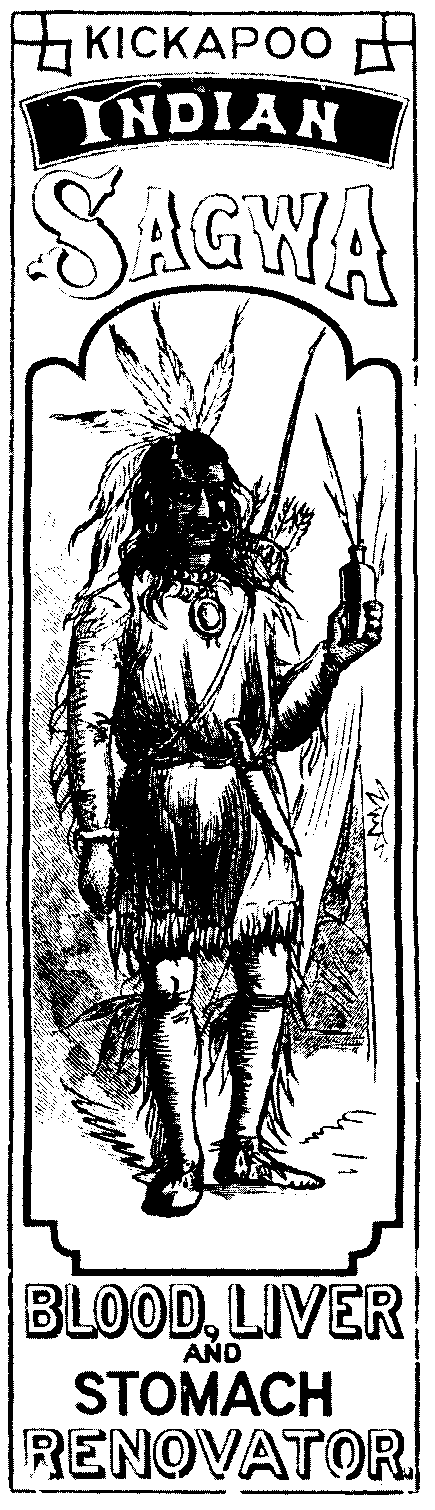
And of course, the following exhibit in the Ripley's Believe It or Not Museum about the power of advertising caught my eye:

It's true the old "cure-all" and patent medicines had no basis in fact (or even in reality, I mean, a blood, liver, and stomach renovator? What does that even mean??), but they definitely knew how to advertise.

Here are a few funny ads for patent medicines. Don't be fooled!

Monday, October 19, 2009

Final Score - Revolution 0, Fire 0....Cranberries Win!

Saturday night I was at Gillette Stadium in Foxboro, MA for a soccer game with my Mom and brother. (Go Revs!)

Anywho, the game ended in a scoreless tie but there were some interesting marketing opportunities that caught my eye, similar to the ones I'd mentioned in a previous post about the Red Sox sponsors...

As we entered the stadium, we were greeted by a number of people in Ocean Spray cranberry grower overalls (you know, like the ones from the TV commercials) handing out samples of various products. Along with that there was a simulated bog of the wonderberries:

Following our close encounter of the cranberry kind, we made a pit stop at the restroom, where we noticed the hand-dryers had been updated:

If you can't read the small print under DO SOMETHING PATRIOTIC, it says "INSTALL PATRIOTS HIGH-SPEED ENERGY-EFFICIENT XELERATOR HAND-DRYERS IN YOUR RESTROOMS."

Side Note: Maybe I'm totally missing it, but go to Patriots.com and try to find anything, anything at all, on purchasing Xelerator hand-dryers. I dare you.

And then, of course, American Airlines wanted to get in on the act. And since they are a sponsor of Susan G. Komen for the Cure and it's Breast Cancer Awareness Month, there were signs distributed that were pink on one side and said "GOAL for the cure!" which everyone was supposed to hold up when the Revs scored a goal. (It was a scoreless tie, so there was no opportunity for that to happen, but a solid idea). The other side that faced all of us in the stands reinforced the sponsor's logo:


I guess the moral of the story is that marketing is everywhere, even in the bathroom, so you really can't escape even if you try. I mean, we knew that already, but it's fascinating all the same.

Thursday, October 15, 2009

Report: Top Keyword Price Nears $100 Per Click

The highest-priced keyword in the United States last month sold on Google for $99.44 per click, according to the AdGooroo Search Engine Advertising Update: Q309.

And before I tell you what it is, why don't you think about it for a minute and take a guess...

Used Cars? Not even close.

Debt management? Nope.

Auto Insurance? Getting up there, but still not the correct answer.

Give up?

It's Mesothelioma. Yes, really.

The report released Wednesday pegs Mesothelioma as the highest-selling keyword in September. The same word sold on Yahoo in the No. 1 spot for $60.68 per click. The phrase "auto insurance comparison" took top honors on Bing, bringing in $55.20 per click.

Well, that's certainly news to me. I've seen the TV commercials for the class-action lawsuits - "if you or someone you love has been diagnosed with mesothelioma due to negligence, etc..." - but wouldn't have guessed it would pull $100 per click as a keyword. You learn something new every day!


(Courtesy of MediaPost)

Thursday, October 8, 2009

SEO & SEM - Can't we all just get along?

Here's what you need to know about these two acronyms:

SEO = Search Engine Optimization
SEO is simply optimizing the keywords and links to your site and improving other aspects of your site to maximize your search engine rankings, resulting in an increase in traffic. Potential customers are already searching for your products and services, and by positioning your business at the top of the search engine results page (SERP) they will find you! SEO increases your organic (non-paid) search results.

SEM = Search Engine Marketing
SEM places your text ads to appear as sponsored listings on the SERPs (top and right-hand side of the page). It allows you to put your business in front of potential customers at the precise moment they're searching for what you sell. SEM makes it easy to test different ad copy, target local areas or the entire nation, and control your budget through spending limits and campaign optimization. Because your keywords are tailored to your business, you reach only those people interested who are interested, and only pay for your ad when it's clicked on! SEM increases your paid search results.

With the basics out of the way, you're probably wondering now why you'd pay for search results with SEM when you can get the organic results for free with SEO.

Think of it this way, if you've put the time and effort into creating, maintaining, and optimizing an SEM campaign to drive traffic to your website, you need your website to be set up correctly to give them what they came to find. If you can bring someone to your site but they can't find what they want immediately, your SEM is a waste.

From Raise My Rank SEO Services:
You only have a few seconds to convince them that your site can deliver what they want. Will your visitors, failing to find what they're looking for, click their browser's back button and try another site?

Your site has to be ready for your visitors. It needs to be written, structured, and coded in such a way that the information is clearly laid out and easy to find. If it isn't, your site will either be immediately forgotten by visitors, or worse, it will be remembered as one that fails to deliver.
On the other hand, SEO can take 6 months to fully optimize, which can be a long time to wait if you need to see results sooner or if you have a limited-time offer.

Gareth O Neill, a Microsoft Media Specialist, says:
If you do SEO properly then you will get clicks for free but if you have a fresh offer your site will take time to get spidered and start showing up in the organic listings.

This is where SEM will deliver better results. You can create the campaign straight away [...] and have your ads appearing in the paid listings.

For example, if you have an entertainment site and big news has come out from Hollywood or you have a computer games site and the latest game has just hit the shops, then there is nothing as quick as PPC to provide you with visibility.
So now what? Well, the bottom line is that your SEO and SEM should be working together. Here's just one great reason why your SEO and SEM should suck it up and be friends, from AllthingsSEM.com:
Recently Google made public some changes to their AdSense program. These changes include the addition of a quality score that is used when determining the cost of an ad. This quality score will mean that two exact ads will have different costs depending on the quality of the destination page. Although there are many factors that will be used to measure the quality of the destination page, most of these factors can be influenced by SEO. In fact, improving the quality of a web page as perceived by the search engines is pretty much what all SEO is about. So if you use SEO to increase the quality of your site, you will end up reducing the cost per click of your ads.


And now you know (and knowing is half the battle).


(Courtesy of Microsoft Advertising Community, All Things SEM, and Raise My Rank)

Friday, October 2, 2009

Times Square Owners Create Ad Network

Sept 24, 2009

- Katy Bachman

NEW YORK A newly formed group of media companies controlling some of the biggest digital signs in Times Square will make it easier for brands to simultaneously put their names in lights across multiple venues.

Called Times Square Domination, the networking effort offers marketers a one-stop shop for creating an unprecedented campaign in the nation’s largest out-of-home arena, visited by 565,000 people each day.

The network will be able to sync marketers' messages across many of Times Square’s most captivating video billboards, including Clear Channel’s Spectacolor HD sign, ABC SuperSign, the Nasdaq monitor and News Corp.’s Astrovision sign. As part of the package, TSD offers accompanying marketing and event services such as sampling and the use of street teams to create brand immersion.

“Sometimes, the benefits of coming together as an industry for customers are so compelling that even strong rivals see the value,” said Harry Coghlan, president of Clear Channel Spectacolor, one of the companies participating in the network along with ABC Regional Sports & Entertainment Sales, Nasdaq, News Corp. and Reuters.

TSD will also include the Times Square Network, a fully integrated platform created around Clear Channel’s Spectacolor HD sign at 47th Street at Duffy Square. When it launches next year, Clear Channel is hoping to turn the sign into a new entertainment source, complete with original programming broadcast from a Times Square studio and streamed on a companion Web site. Short segments will focus on popular interests, including major product launches or interviews with people on the street. Sponsored advertising will air in pre-determined slots and be combined with live-event marketing, mobile messaging, polling and contests.

“When we build SpecHD, we knew this attraction could also support a new model,” said Coghlan. “We knew that we could enable true interaction with the audience, going beyond traditional one-way broadcasts to create true two-way conversations.”


(Courtesy of AdWeek.com)

Thursday, October 1, 2009

Natural Born Clickers - Follow Up

Following up on a previous post regarding click-through rates, Starcom has released a new report on measuring online ad success.
The number of people online who click display ads has dropped 50% in less than two years, and only 8% of internet users account for 85% of all clicks, according to the most recent "Natural Born Clickers" study from ComScore and media agency Starcom. As the pool of people who click on banner ads rapidly decreases, it begs the question: Is the long-used click-through rate now officially useless?
Useless? Probably not. Outdated? Absolutely.
"The click has always been of dubious value," said Joshua Spanier, director of communication strategy at Goodby, Silverstein & Partners. "But clicks are easy to understand and easy to measure. We still know that display advertising has unequivocal value; your search performance improves as well. Together, search and display are much stronger than apart."
So how do we now measure the success of an online campaign if we can't use the click-through rates? Here are some tips:
1. Goodby's Mr. Spaniers points out that it's important for marketers to ask their agencies how display ads fit into the larger marketing plan. "With the media mix, how do you set up overall metrics?" he said. "It's unrealistic to look at one element of one media for success. Since online media is so trackable, it's is held to a higher standard. The reality is no one looks at print advertising like that. You can't measure print that way or TV because they don't have built-in capacity. It's a little unfair that display becomes the whipping boy."

2. In the digital space, look at how elements like display and search coalesce, Mr. Spanier said. How do people end up at a website to make a purchase? Look at sales of a product on-site with consumers' exposure to ads. "There is no way display advertising is wasting money," he said, "even if people don't click."

3. Clicks are a direct-response measurement. For display campaigns, look at brand-awareness studies, purchase-intent lifts and engagement rates. "Users might work with an ad, but not click on it," said Paul Gunning, CEO of Tribal DDB Worldwide.

4. Look at display view-through rates. "CTRs have a value, there is still a hand being raised, but view-through is more important," Mr. Gunning said. "How many people actually end up where you wanted them to? How much time are they spending?"

5. Look at the creative. While consumer attitudes online have undoubtedly changed, think about how messaging does or doesn't demand clicks. If you want to measure success against click-throughs, include strong calls for action. Or, if you have a rich-media experience, other metrics such as engagement time are probably more telling. And that may be the case as more banners include innovations such as embedded video and rich media, said Atmosphere BBDO's Warren Griffiths, group account director for Visa, Emirates Airlines, Hertz and Starwood. "More banners have become the destination. I don't believe that would account for a 50% drop in clicks, but this may have had some impact."

Read the full article here.


(Courtesy of adage.com)

Tuesday, September 22, 2009

'Glee' banks on risky strategy


By Lisa Respers France

(CNN) -- When Fox aired a sneak-peek episode of its new series "Glee" four months before the show actually premiered, it took a big chance that the audience would still care.

To help maintain the buzz, it delved into social networking, maintained a strong online presence, dispatched the show's actors to malls across the country and held a fan contest.

In an era when episodic television is battling for ratings against reality television and broadcast TV faces the loss of audience to cable networks, those familiar with the industry said, such innovation may have to become the norm.

"Particularly for those networks that skew younger such as Fox, CW and ABC to an extent, they are going to have to really promote all of their shows all year long and find new ways to keep them in front of their viewers and remind them that they are there," said Ed Martin, a television critic who writes for JackMyers.com. "What Fox did last spring was something totally new that had never been done before."

In a week when most prime time shows are debuting with the hopes of attracting an audience, "Glee" seems to have already found its niche. On Monday, Fox announced that it had ordered a full season of the show.

"Glee" follows the exploits of a group of underdogs who are members of a high school show choir.

The hour-long musical comedy, co-created by "Nip/Tuck" producer Ryan Murphy, created high anticipation after its first airing in May, following an episode of the wildly popular "American Idol."


The pilot was re-aired with a special director's cut prior to the premier of the actual season with Fox counting the pilot as episode one. Episode four debuts on Wednesday.

Bill Gorman, editor and co-founder of the site TV By the Numbers, said he would put the level of interest in "Glee" on his site "as pretty strong for a new show."

Gorman said the show -- whose premiere numbers may or may not have been helped by the fact it was one of the few airing during President Obama's health care address -- is initially faring well among the coveted 18- to 49-year-old viewer demographic.

According to the Nielsen Ratings, the "Glee" premiere garnered 7.44 million viewers, placing it in 19th place in the top 20.

"The 'Glee' premiere this fall did better than what Fox is calling the preview after 'American Idol,' " Gorman said.

To maintain interest over the summer, the show embarked on an ambitious marketing scheme. Joe Earley, executive vice president of marketing and communications for Fox, said the show was screened at summer camps, stars engaged in a 10-city tour, street teams handed out "Glee"-related items, and trailers were shown in front of the latest "Harry Potter" film.

Online, characters had Facebook pages and Twitter accounts, the pilot was available for streaming, and the show's stars took handheld cameras to events to gather behind-the-scenes content. The director's cut of the pilot was followed by a "Tweet-peat" where the stars and the fans took to Twitter to discuss the episode.

Martin said he was present when Fox screened an episode at the geekiest of all events: Comic-Con in San Diego, California.

"It was a standing-room-only crowd of several thousands of people," Martin said. "The cheering and yelling and screaming was ear-splitting. The crowd almost blew the roof off the place with their enthusiasm for the episode."

Visibility seemed to be key for the quirky show that some have referred to as " 'High School Musical' on steroids."

Earley said one challenge came in that the many facets that have given "Glee" its distinction -- it's a black comedy, it's a musical, it's a drama, it's about high school, it's about adults -- also made it difficult to market.

Still, airing the pilot four months before its regular run could have easily backfired, he said.
"If people didn't like it, it would have been four months of negative buzz," he said. "We could have been killing a show before it even began."


The result has been an strong fan base with a deep engagement who are taking to social networking to spread the message and buying the songs on iTunes, Earley said.

"What we have is this core of really passionate, very savvy fans, and they are definitely ambassadors for the show," said Earley, who added that executives have been pleased with the ratings.

Chicago Tribune TV critic Maureen Ryan said executives seem to have totally committed to a show that from the onset was a risk.

"You either love this show, or you really don't care," she said. "There's not really a huge amount of in-between."

Ryan said that, in her opinion, the show is far from perfect (she points to the unlovable character of teacher Will Schuester's wife as a weakness) but says it has an opportunity to do well commercially.

"The terrific thing about 'Glee' is not only that it has this interesting concept going for it, but it has a ton on money-making potential," she said. "They've been selling the DVD of the pilot at Walmart, and they sent out a press release saying five of the top 200 songs on iTunes are songs from the show, and they are releasing a soundtrack soon."

Critic Martin said, given its mix of music and satire, the "Glee" strategy may not work for every show -- say a medical drama -- but if the network strikes gold with the new series, he imagines that it may serve as a blueprint for others.

"It would not surprise me at all if Fox had another promising new show in their development plan for next fall and decided to give it the same treatment as 'Glee,' " Martin said.


(Courtesy of CNN.com)